
A perforated tray is only as good as its holes. When the holes come out round, clean and evenly spaced, dough sits flat, heat moves through the base the way the oven was designed for, and the tray releases cleanly after glazing. When the holes come out ragged, with dross on the underside, the tray needs grinding before it can even go for coating.
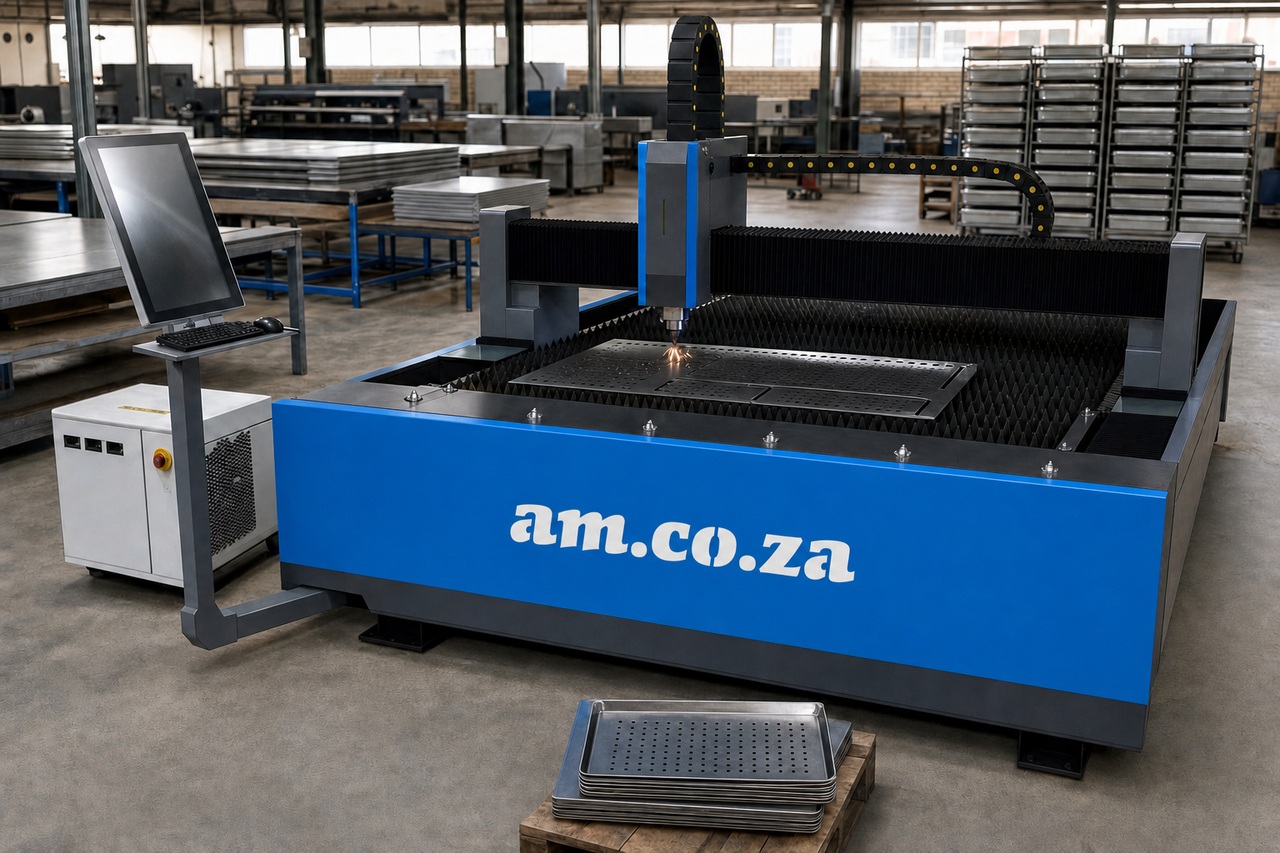
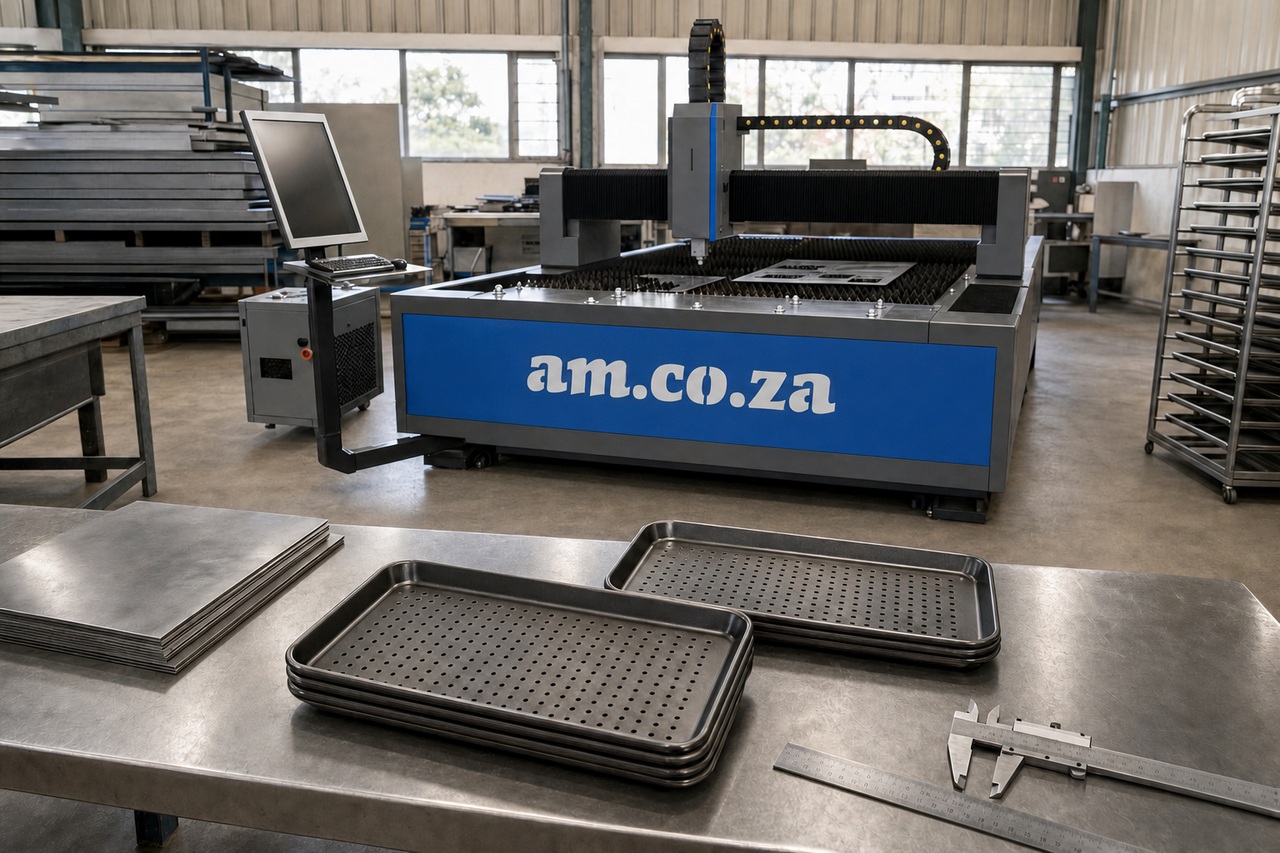
Since the fibre laser arrived on our Westmead floor (we wrote about that here), most of the difference between those two results has come down to a few small parts at the tip of the cutting head. This guide explains what those parts do, the simple checks our team builds into the week, and how our equipment partner AM.CO.ZA helps us keep it going.
Why the tip of the head matters so much
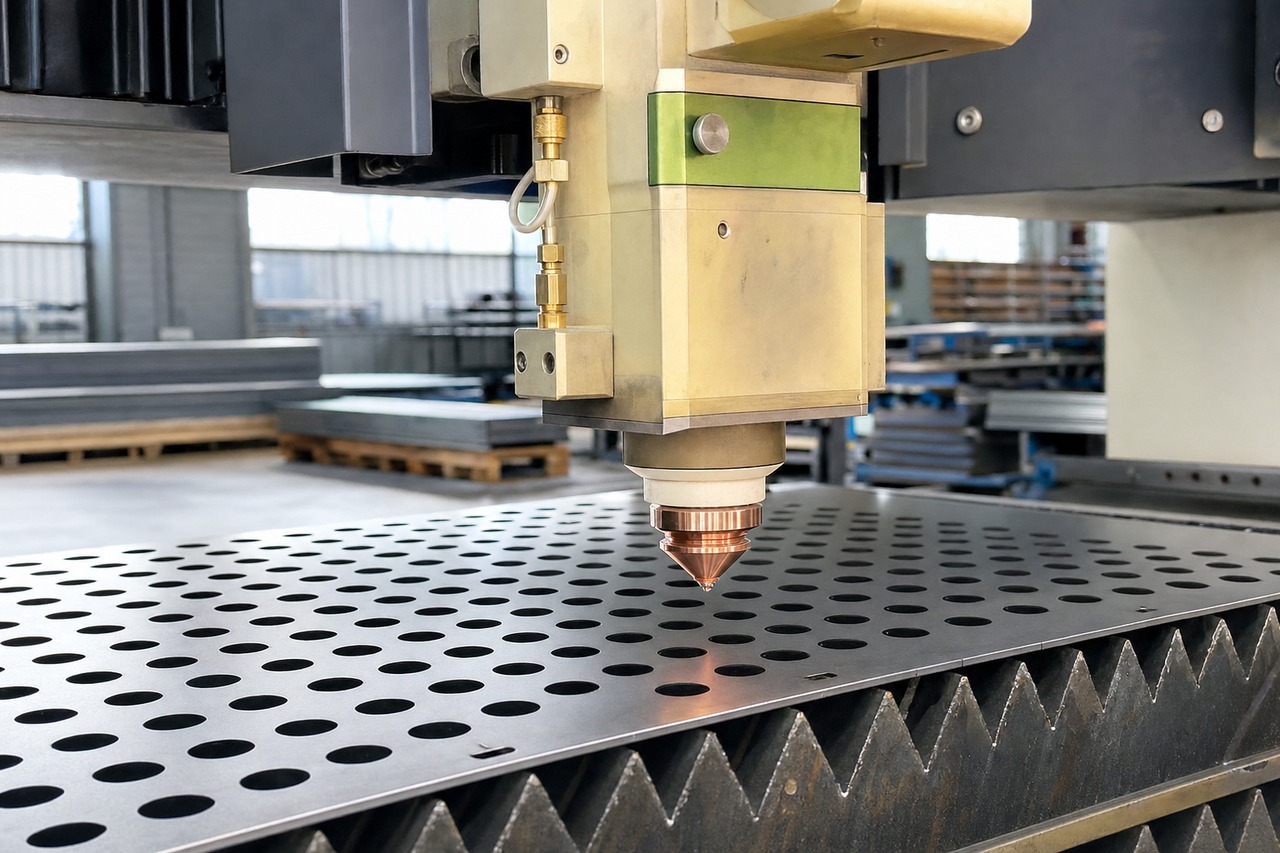
A perforated tray can carry hundreds of small holes, and every one of them is a separate pierce and cut. The laser beam passes through a protective lens and leaves through a copper nozzle that also directs the assist gas. If that nozzle is dented, burnt or slightly off-centre, the gas flow goes lopsided and the hole goes oval or picks up slag. If the protective lens is dirty, the beam loses power at the cut and the bottom edge starts to drag.
On a solid sheet a tired nozzle can go unnoticed for a while. On a perforated base it shows quickly, because you can compare the latest holes with the first ones on the same sheet. That is why the perforation benefits we describe to customers depend on the parts list as much as on the drawing.
The checks we build into the week
These are the habits our team follows. They sit alongside the machine maker's manual and AM.CO.ZA's guidance, not in place of it, and the exact intervals depend on how hard the machine is running.
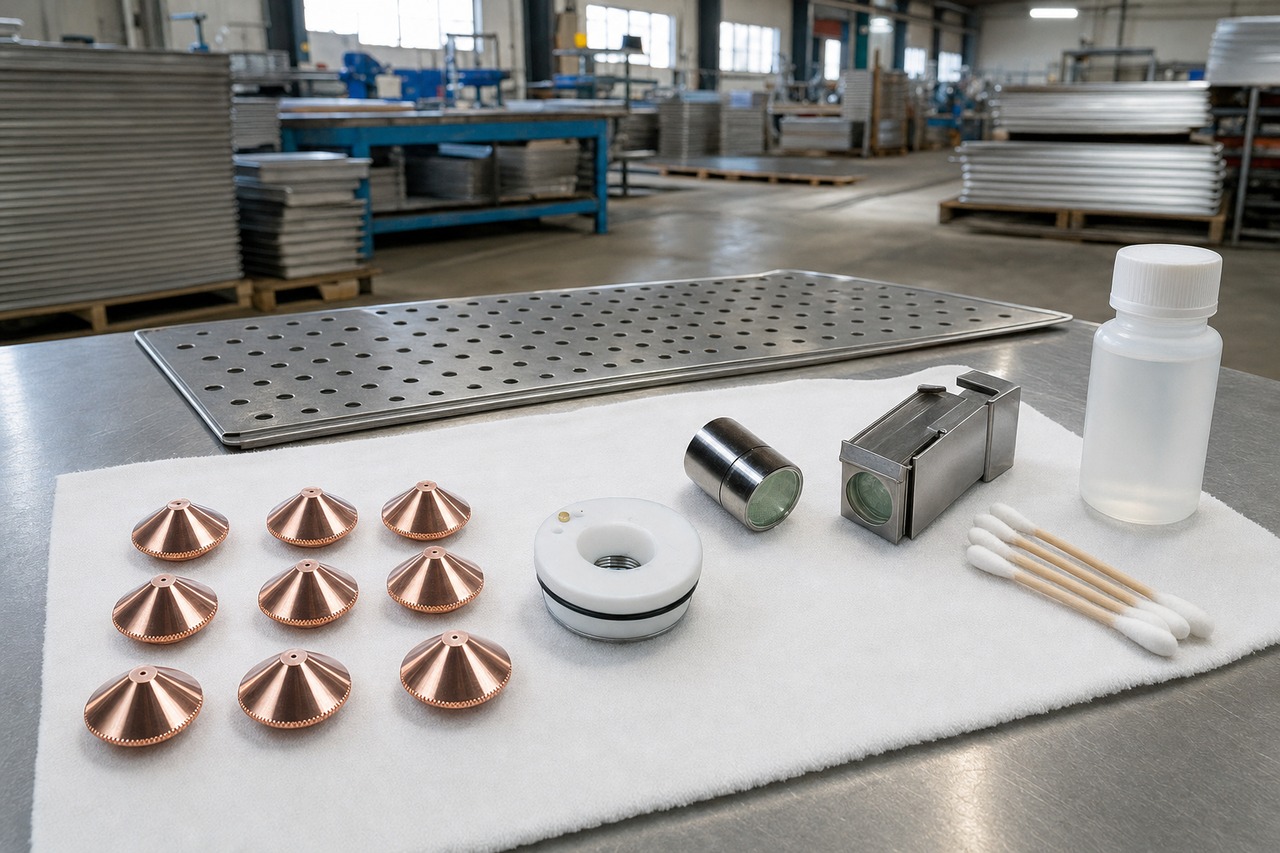
1. Look at the nozzle before the first sheet. A quick look for spatter, a burnt rim or a hole that is no longer round. AM.CO.ZA supplies single-layer 1.2 mm cutting nozzles and double-layer 1.2 mm nozzles, and AM.CO.ZA's technicians can advise which type suits your head, gas and material. A nozzle is a small part compared with a sheet of scrapped tray bases.
2. Calibrate after a nozzle change. A new nozzle changes the reading the head uses to hold its cutting height. AM.CO.ZA's short video How to Calibrate Raycut Laser After Changing Nozzle shows the idea.
3. Check the ceramic holder. The white ceramic ring that carries the nozzle can take a knock when a part tips up on the bed, and a cracked ring can give strange height readings. A spare ceramic nozzle holder with O-ring is worth having on hand.
4. Keep the protective lens clean. The lower protective window catches fumes and fine spatter so the focusing optics stay clean. AM.CO.ZA's video General Maintenance for RayCUT Only Change Bottom Protection Lens and Nozzle shows how the lens and nozzle are changed. Clean hands, a lint-free cloth and no bare fingers on the optics.
5. Leave the source end to the technicians. The output end of the laser source has its own QBH protection lens. This is not a routine operator job; it is one for a trained technician.
When the beam itself needs a look
If a clean nozzle and a clean window still give uneven holes across the bed, the beam may no longer be centred in the nozzle. That is a job for someone who has done it many times. AM.CO.ZA supplies a visual beam alignment tool for this kind of check, and their engineers share a lot of their day-to-day service work on the Machinery Support vlog. We plan service visits around our production schedule, the same way we plan our customers' service enquiries, so a check does not land in the middle of a big plant order.
Why we buy these parts from AM.CO.ZA
We could chase nozzles from different sellers. We do not, for three plain reasons.
- Service. The team that supplied the cutter is the team we ask, and the AM.CO.ZA Durban branch is a short drive from Westmead. They also have branches in Johannesburg and Cape Town.
- Best price for the quality. Buying the consumables from the same supplier as the machine means fewer "close enough" parts.
- Product quality. Good nozzles and clean lenses show up directly in the holes, and that means less grinding before coating.
The consumables are grouped on one page, AM.CO.ZA's fibre laser cutter consumables range, which keeps reordering simple. When our people want to understand a machine better, the AM.CO.ZA guide on 8i and the Ambitious Academy machine class are good places to start.
What it means for your trays
Our customers never see a nozzle, but they see the result: perforated or solid trays and steel floor tiles that match the last batch, with clean, even holes. Fewer rejects at our own factory quality checks also help keep lead times steady and reduce production downtime on your side.
Planning new trays or a replacement set? Contact our Westmead team and ask for a quote, or meet the people behind the work.