Waiting on outside blanks
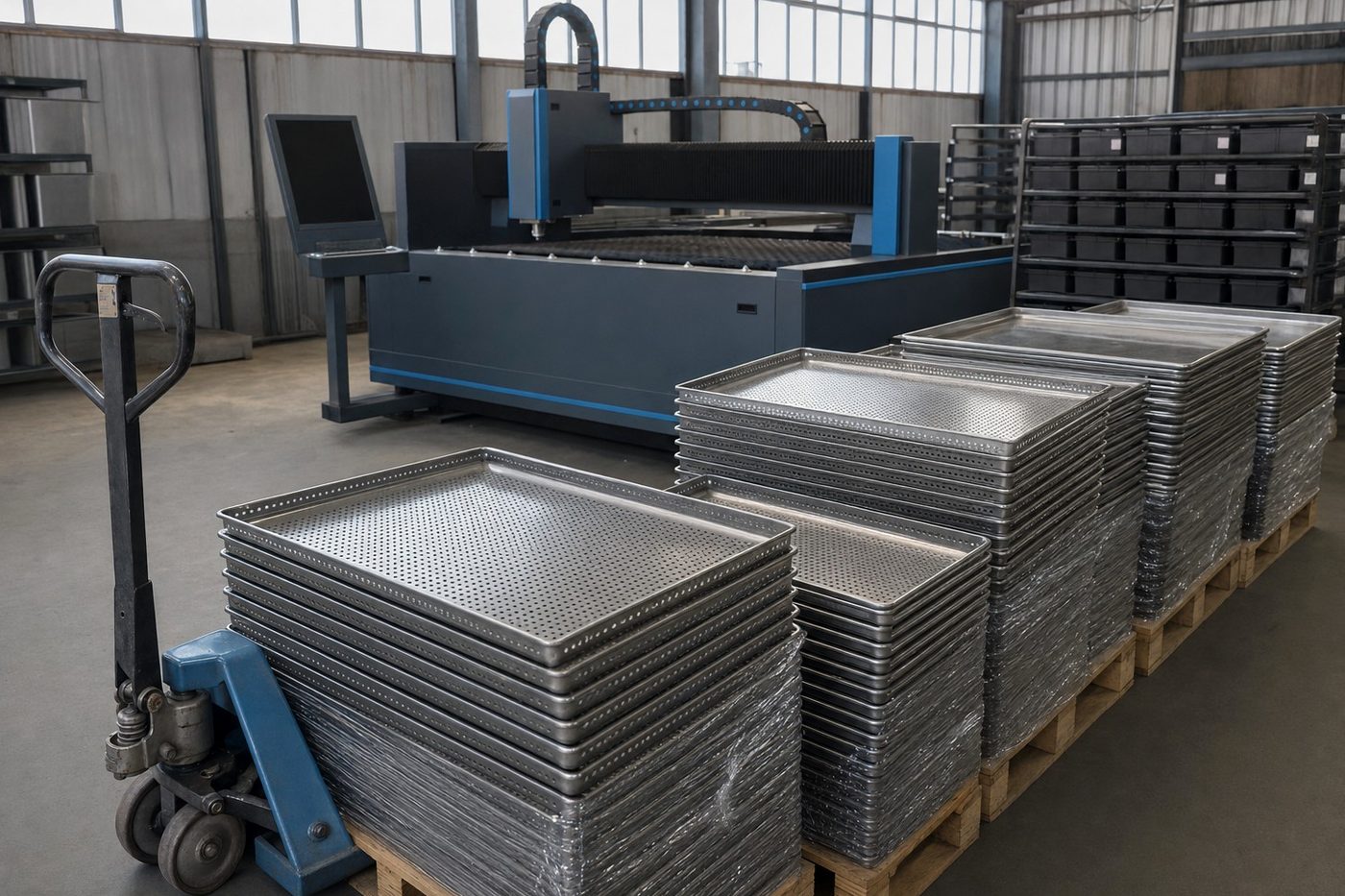
Almost every perforated tray we build is drawn for one oven and one product. Hole size, pitch and steel gauge change from order to order, and for years the perforating went out to a profile cutter in town. Our folders and welders could not start until those blanks came back, and on a busy month that queue set the pace for the whole workshop.
“Plant bakeries change oven beds and loader widths without much warning. Cutting our own blanks means the next tray is our problem to solve, not a subcontractor’s.”
Mpumelelo Motsepe, Managing Director
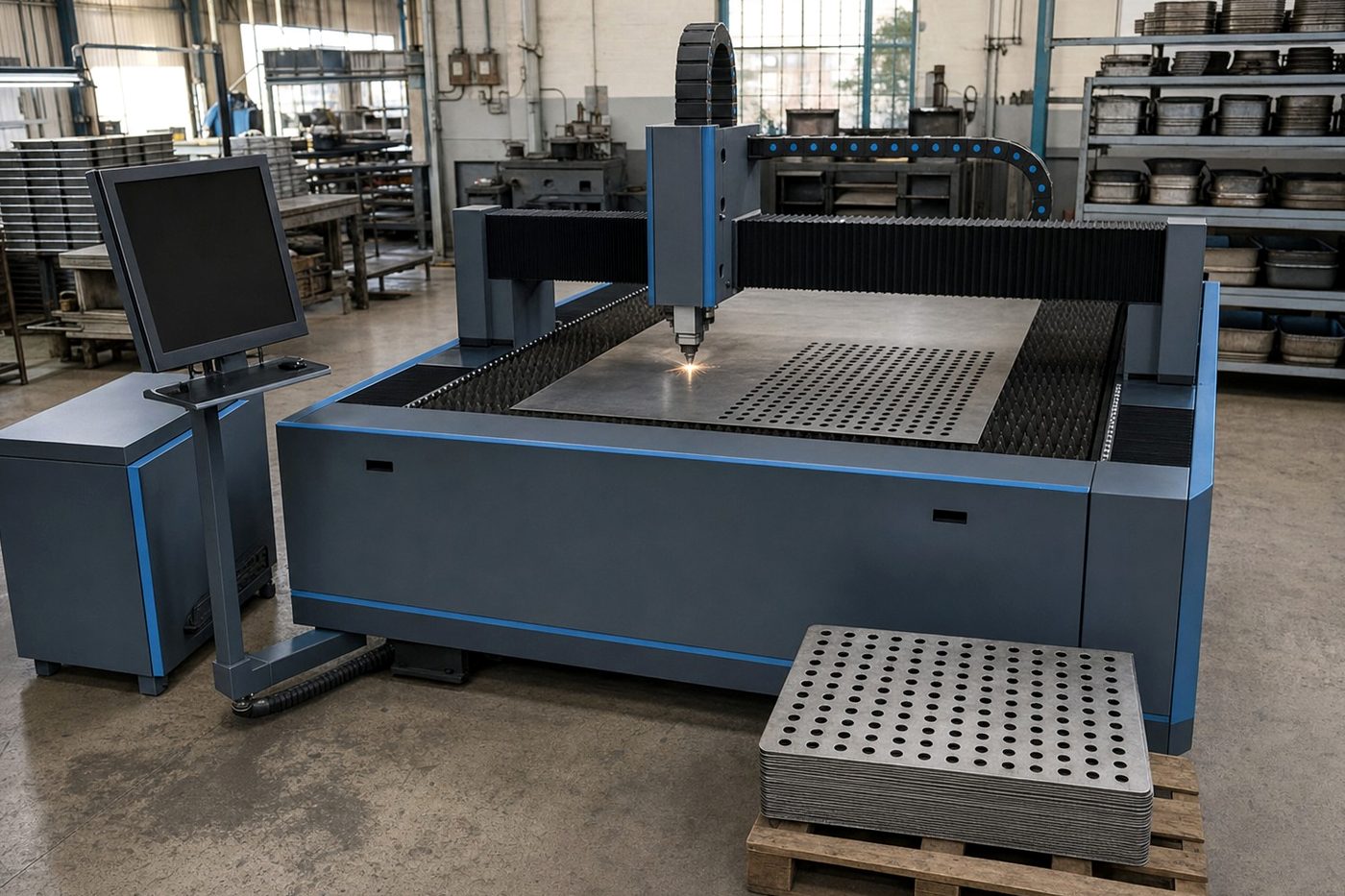
A full-sheet fibre laser for trays and lids
The cutter is the LF-1530/1000 fibre laser, a 1000 W machine with a 1.5 by 3 metre bed. It takes the mild steel we use for tray bases, pan lids and floor tiles, and it cuts round holes, slots or mixed patterns straight from our drawings. Corner notches for the press brake come off in the same program.
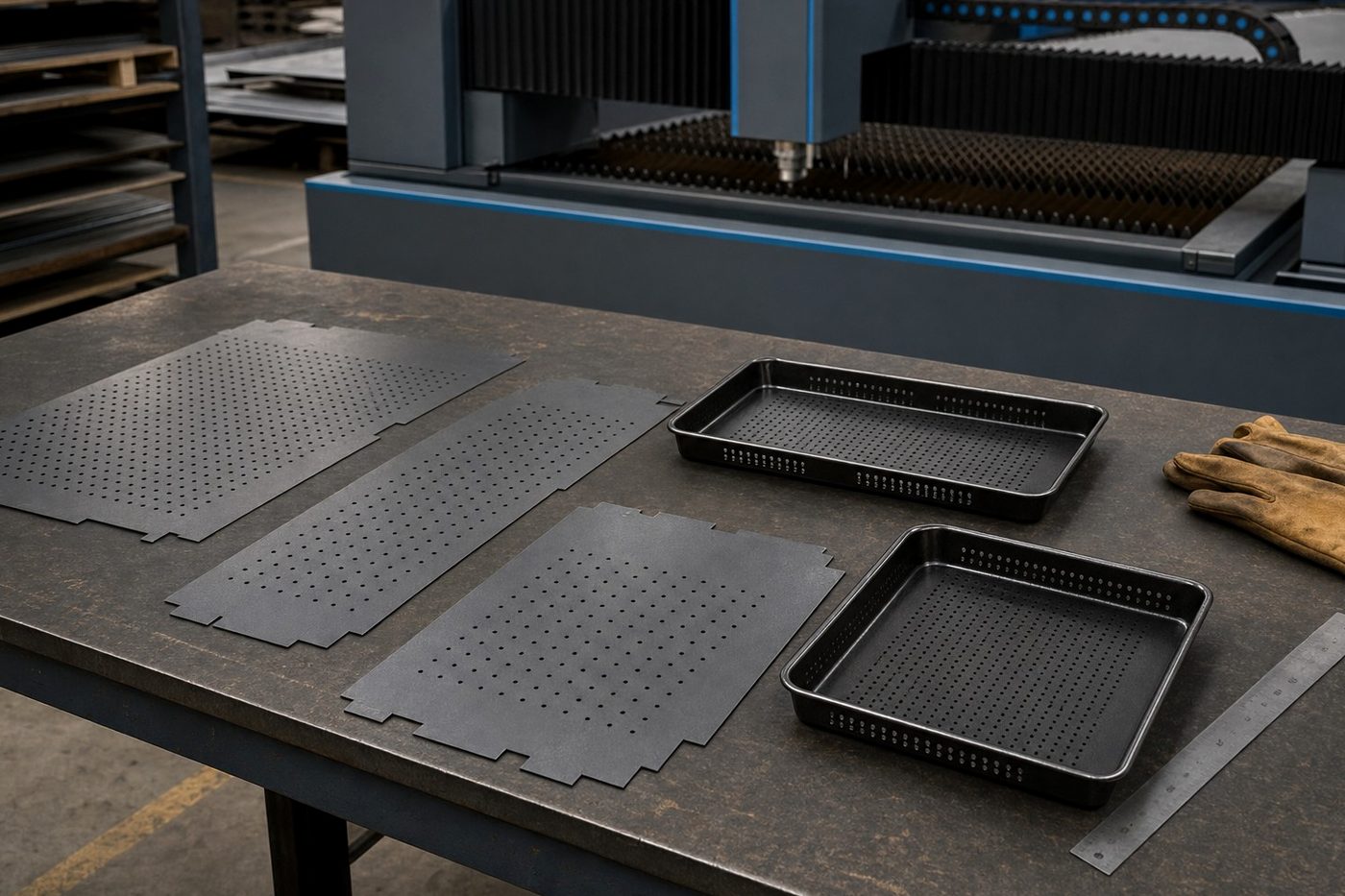
Riaan Vosloo, who runs fabrication, points to repeat work as the real gain. A saved program gives the same holes in the same place on the fiftieth tray as on the first, which matters for custom tray sets and custom pan builds where new stock has to stack with old. Buyers planning a new pattern can start with our notes on how to spec custom trays.
Nozzles and protective lenses are ordered through AM.CO.ZA alongside our other workshop stock, from their fibre cutter consumables range, so the machine is never parked for want of a spare.
A permanent code on every marked pan
The second machine is the LabelMark 30 W fibre laser marker. It etches a small square dot code into the pan wall or the strap of a strap pan set. Paint pens and stickers wear off in the oven and the wash bay; a laser mark is part of the steel and stays readable for the working life of the pan.
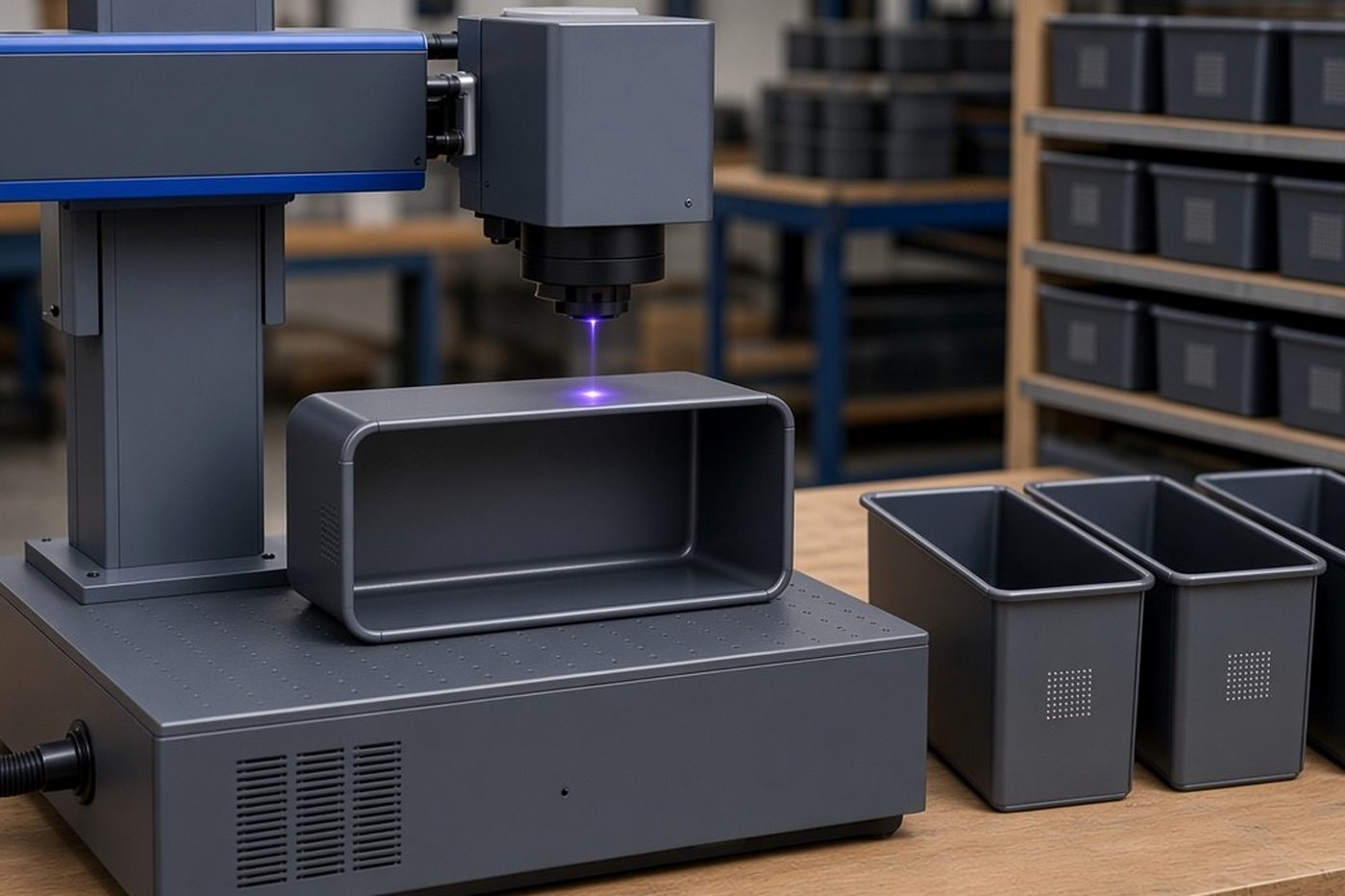
Nomvula Mdletshe reads those codes on a fleet assessment. Each set can be traced to its build date, its last recoat and every repair, so a bakery can see which pans still earn their place and which are due for retirement. Rhulani Seabi has made marking a step in our factory quality checks before anything leaves the floor.
How we chose a supplier
We spoke to several machine suppliers first. AM.CO.ZA gave us plain answers about what each laser could and could not do on bakeware gauges, the best price we were offered for the build quality, and proper after-sales support. Their Durban branch is a short drive from Westmead, which counts when a production line cannot wait on a technician flying in. We compared their fibre laser cutters and laser markers before settling on these two, and their company guide sets out what they support.
“Their technician stood next to Riaan for the first production jobs, and they still pick up the phone when we ring with a question.”
Deshni Lutchman, Operations Manager
What changes for bakeries we supply
- Quicker turnaround on perforated trays, lids and one-off blanks
- Hole patterns that repeat exactly from one batch to the next
- Laser-etched IDs on pans and strap sets for fleet tracking
- Every part still cut, folded and finished here in Pinetown
If you run a plant bakery and want new perforated trays, or codes added to the pans you already own, send the details through our quote request page or the contact page.